
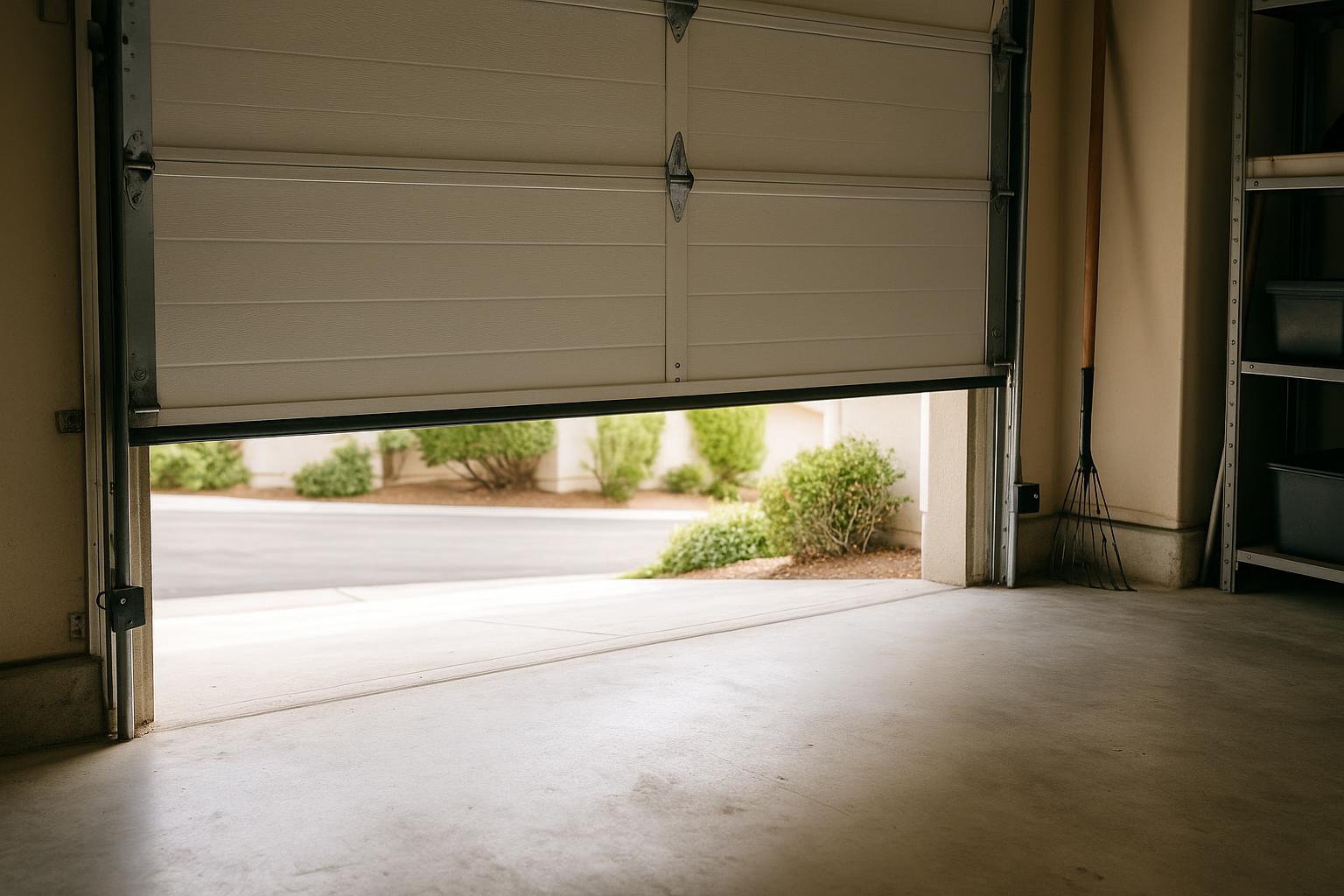
That Frustrating Moment When Your Garage Door Won't Stay Closed
You press the button on your remote, watch the garage door start its descent, and then — just before it reaches the floor — it stops and reverses back up. You try again. Same thing. Maybe it works on the third try, maybe it doesn't. Either way, you're left wondering what's going on and whether your garage door is broken.
This is one of the most common garage door complaints we hear from homeowners in Ramona, and the good news is that it's usually fixable. The bad news? Ignoring it can lead to bigger problems down the road, including a door that stops working entirely or becomes a security risk for your home.
Let's walk through the most common reasons your garage door reverses before closing and what you can do about each one.
Understanding the Safety Reversal System
Before we get into specific causes, it helps to understand why your garage door is designed to reverse in the first place. Federal law has required garage door openers manufactured after 1993 to include two safety reversal systems:
- Photo-eye sensors: These are the small sensors mounted near the bottom of your garage door tracks on either side. They project an invisible beam across the opening. If anything breaks that beam while the door is closing, the door reverses.
- Auto-reverse mechanism: If the door physically contacts an object while closing, it's designed to reverse direction immediately.
Both of these systems exist to prevent injuries and property damage. So when your door reverses unexpectedly, it's usually because one of these safety systems has been triggered — even when there's nothing actually in the way.
Common Cause #1: Misaligned Photo-Eye Sensors
This is the number one reason we see garage doors reversing prematurely, especially here in Ramona where dust, wind, and outdoor debris are part of daily life. The photo-eye sensors need to be precisely aligned to communicate with each other. If one gets bumped — by a bicycle, a trash can, a pet, or even vibration over time — the beam is broken and the door thinks something is in its path.
What to Check
- Look at the indicator lights on both sensors. Most sensors have a green and amber LED. If one is blinking or off, alignment is likely the issue.
- Gently wipe the sensor lenses with a soft cloth. Dust, cobwebs, and dirt can block the beam.
- Make sure nothing is obstructing the space between the two sensors, including leaves or low-hanging items on nearby shelves.
If cleaning and realigning the sensors doesn't solve the problem, the sensors themselves may be failing and need replacement.
Common Cause #2: Incorrect Close-Limit Settings
Your garage door opener has close-limit settings that tell it how far the door should travel before it's considered fully closed. If these settings are off, the opener may interpret the door reaching the floor as hitting an obstruction, which triggers the auto-reverse.
This is especially common after a new opener installation or when homeowners move into a home where the previous owner may have adjusted the settings. It's also something we see after seasonal temperature swings, which can cause metal tracks and hardware to expand or contract slightly.
What to Do
Most openers have adjustment screws or a digital control panel that lets you fine-tune the close-limit. Your owner's manual will have specific instructions for your model. However, if you're not comfortable making these adjustments yourself, it's a quick fix for a professional. Getting it wrong can compromise the safety reversal system, so precision matters.
Common Cause #3: Worn or Damaged Tracks
Garage door tracks guide the door's rollers as it opens and closes. Over time, tracks can become bent, dented, or clogged with debris. When the rollers encounter resistance from a damaged section of track, the opener senses the extra force and reverses the door as a safety precaution.
Ramona homeowners with older garage doors are especially prone to this issue. Years of use, minor impacts, and exposure to the elements can gradually degrade track condition without any obvious visible damage from the outside.
Warning Signs of Track Problems
- The door seems to hesitate or jerk at a certain point during closing
- You hear scraping or grinding noises
- The door appears crooked or uneven as it moves
- Visible gaps between the rollers and the track
Track repairs should be handled by a professional. Attempting to bend tracks back into shape without proper tools can make the problem worse and create a safety hazard.
Common Cause #4: Broken or Weakening Springs
Your garage door springs do the heavy lifting — literally. They counterbalance the weight of the door so the opener doesn't have to work as hard. When springs weaken or begin to fail, the door becomes heavier than the opener expects. The opener senses this extra resistance and may reverse the door rather than force it closed.
If your door also feels unusually heavy when you try to lift it manually, or if it slams down faster than normal, weakening springs are a likely culprit. Spring replacement is not a DIY job. These components are under extreme tension and can cause serious injury if handled improperly.
Common Cause #5: Electrical or Wiring Issues
Sometimes the problem isn't mechanical at all. Frayed wiring between the opener and the sensors, a short circuit, or even power fluctuations can cause erratic behavior, including random reversals. Rodents chewing on wires in the garage is more common than you might think, particularly in the rural areas around Ramona and San Diego Country Estates.
If you've ruled out the other causes and the door still reverses inconsistently, it's worth having the electrical connections inspected.
When to Call a Professional
Some of these fixes — like cleaning sensor lenses or clearing debris from the tracks — are perfectly safe for homeowners to handle. But many garage door repairs involve components under high tension or electrical systems that require experience and proper tools.
Here's a good rule of thumb: if you've tried the basic troubleshooting steps and the problem persists, or if the issue involves springs, tracks, or wiring, call a professional.
At Ramona Door & Opener, we diagnose and fix reversing garage doors regularly for homeowners across Ramona, Poway, Escondido, and Lakeside. We'll identify the root cause, explain your options clearly, and get your door working reliably again — usually in a single visit.
Don't Ignore a Reversing Garage Door
A garage door that won't close properly isn't just an inconvenience. It's a security vulnerability, an energy efficiency problem, and potentially a sign of a more serious mechanical issue developing. The longer you wait, the more likely a small fix turns into a costly repair.
If your garage door has been giving you trouble, give us a call. We're a local Ramona business, and we treat every home like it's our own. Whether it's a simple sensor adjustment or a full opener replacement, we'll make sure the job is done right.