
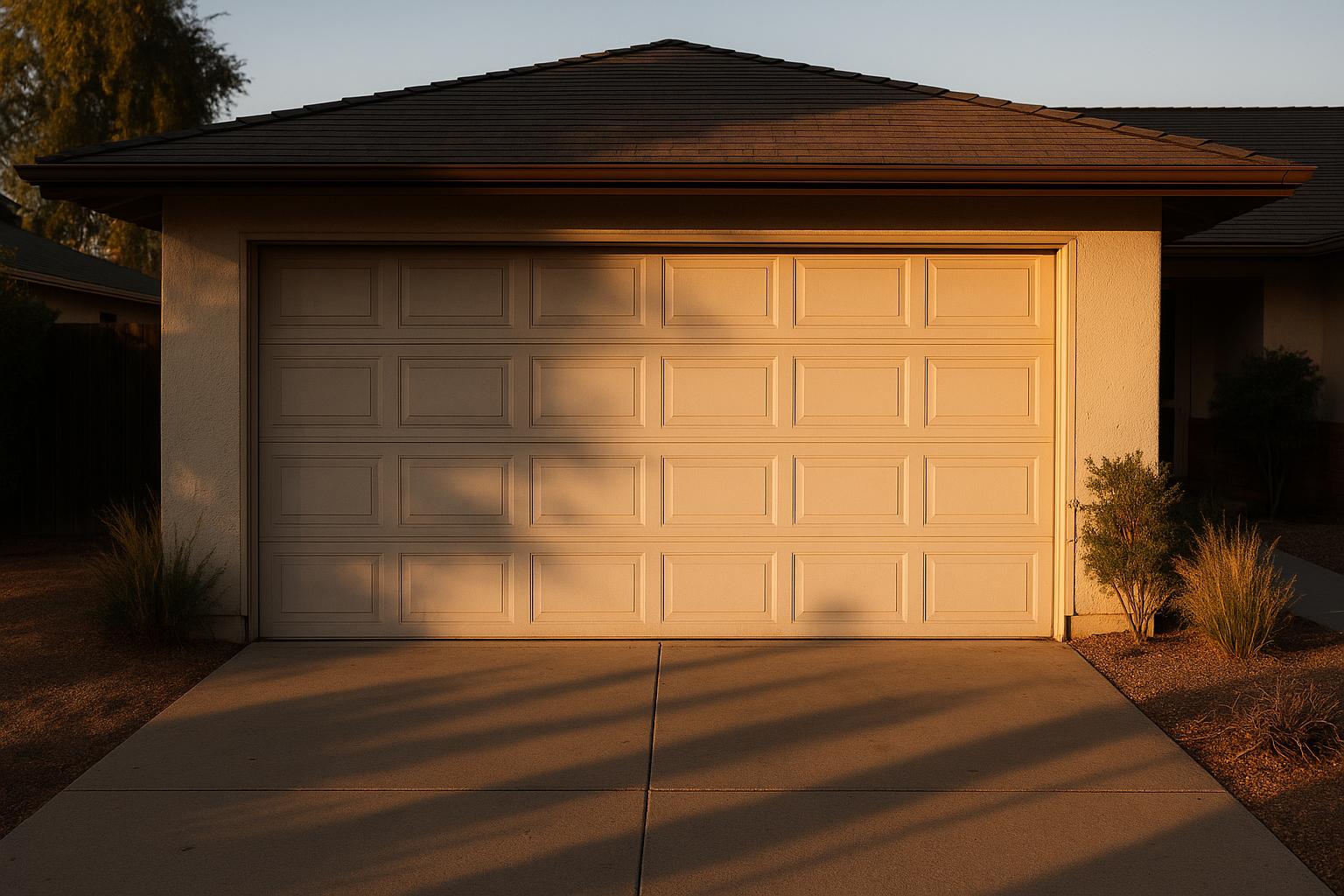
You're Running Late and Your Garage Door Won't Budge
It's early morning in Ramona. You've got your coffee, your keys, and a schedule to keep. You press the button on your garage door opener and… nothing. Or maybe the motor hums but the door barely moves. Perhaps it lifts a few inches and stops dead.
A garage door that refuses to open in the morning is one of the most frustrating household problems — and it's surprisingly common. Before you panic or start forcing anything, take a breath. There are several reasons this happens, and many of them are fixable once you know what you're dealing with.
Common Reasons Your Garage Door Won't Open
Garage doors are mechanical systems with a lot of moving parts. When one component fails or falls out of alignment, the whole system can grind to a halt. Here are the most frequent culprits behind a garage door that won't open.
1. Dead Remote or Wall Button Batteries
It sounds almost too simple, but dead batteries are one of the top reasons people think their garage door is broken. If pressing your remote does nothing — no light on the opener unit, no clicking sound — try replacing the batteries in your remote first. If you're using a wall-mounted button, check whether it's getting power.
A quick test: try operating the door from both the remote and the wall switch. If one works but the other doesn't, you've likely narrowed the problem down to the device itself rather than the opener or door mechanism.
2. The Opener Has Been Disconnected
Most garage door openers have an emergency release cord — usually a red handle hanging from the track. If this has been pulled (sometimes accidentally by a family member or after a power outage), the door is disconnected from the opener. The motor will run, but the door won't move with it.
To reconnect, simply pull the cord back toward the opener or manually move the door until the trolley re-engages. You should hear a click when it locks back into place.
3. Broken Torsion Springs
If you heard a loud bang from the garage — maybe last night or even a few days ago — there's a good chance one of your torsion springs snapped. These springs bear the full weight of the door, and without them, the opener motor simply can't lift it.
Do not attempt to open a garage door with broken springs manually. The door can weigh 150 to 300 pounds or more, and trying to lift or prop it open without functioning springs is extremely dangerous. This is a job for a trained technician.
4. Stripped or Worn Gears in the Opener
If your opener motor runs and you can hear it humming or grinding, but the door doesn't move at all, the internal gears may be stripped. This is especially common in older chain-drive and belt-drive openers that have been in service for 10 or more years. The nylon drive gear inside the unit wears down over time and eventually loses its grip.
A gear replacement is a relatively affordable repair compared to replacing the entire opener, so it's worth having a professional take a look before you invest in new equipment.
5. Misaligned or Blocked Safety Sensors
Modern garage door openers are equipped with photoelectric safety sensors mounted near the floor on either side of the door. If these sensors are misaligned, dirty, or blocked by something — a broom, a shoe, a cobweb — the opener may refuse to operate or may only work in one direction.
Check that both sensor lights are steady (not blinking) and that nothing is obstructing the beam between them. Gently wipe the lenses with a clean cloth and make sure they're pointed directly at each other.
6. Cold Weather and Lubrication Issues
Ramona mornings can get chilly, especially during the fall and winter months when temperatures dip into the 30s and 40s. Cold weather causes metal components to contract and lubricants to thicken, which can make the door sluggish or completely stuck. Weatherstripping along the bottom of the door can also freeze to the garage floor if moisture is present.
Regular lubrication with a silicone-based garage door spray can prevent cold-weather sticking. Apply it to the rollers, hinges, springs, and tracks at least twice a year — ideally before the cooler season sets in.
7. Power Outage or Tripped Breaker
If your opener doesn't respond at all — no lights, no sounds — check your electrical panel. A tripped circuit breaker or a blown fuse can silently knock out your garage door opener. It's also worth checking that the outlet the opener is plugged into hasn't lost power. If you recently had electrical work done or experienced a storm, this is a likely explanation.
What You Can Safely Do Yourself
Some morning garage door problems have simple fixes that don't require professional help:
- Replace remote batteries
- Re-engage the emergency release trolley
- Clear obstructions from the safety sensor path
- Clean and realign the safety sensors
- Reset a tripped circuit breaker
- Apply lubricant to rollers, hinges, and tracks
These are all safe, straightforward steps that most homeowners can handle with basic tools and a few minutes of troubleshooting.
When to Call a Professional
There are certain situations where calling a garage door technician isn't just recommended — it's essential for your safety:
- Broken springs: Never attempt to replace or adjust torsion or extension springs yourself. They're under extreme tension and can cause serious injury.
- Damaged cables: If cables are frayed, loose, or hanging, the door can drop unexpectedly.
- Opener motor failure: Internal electrical and mechanical repairs require proper tools and expertise.
- Bent or damaged tracks: A misaligned track can cause the door to jam or fall off its rails.
- Repeated failures: If your door keeps malfunctioning despite basic troubleshooting, there may be an underlying issue that needs a trained eye.
At Ramona Door & Opener, we see these problems regularly and understand how disruptive a stuck garage door can be to your day. We serve homeowners throughout Ramona, Poway, Escondido, Lakeside, and the surrounding communities with prompt, honest service — because nobody should be trapped in their own garage on a Monday morning.
Preventing Morning Garage Door Surprises
The best way to avoid waking up to a garage door that won't cooperate is preventive maintenance. A professional tune-up once or twice a year can catch worn springs, failing openers, and lubrication issues before they leave you stranded.
During a maintenance visit, a technician will typically:
- Inspect and lubricate all moving parts
- Test the balance and alignment of the door
- Check the condition of springs, cables, and rollers
- Test safety sensor operation and auto-reverse function
- Tighten hardware and inspect weatherstripping
Think of it like an oil change for your garage door. A small investment in maintenance can save you from expensive emergency repairs — and from being late to work.
Don't Let a Stuck Door Ruin Your Day
A garage door that won't open is more than an inconvenience. It can compromise your home's security, disrupt your routine, and even pose safety risks if the underlying cause involves broken springs or cables. If you've tried the basic troubleshooting steps and your door still isn't cooperating, don't force it. Give us a call and let a professional diagnose the problem safely and get you back on track.