
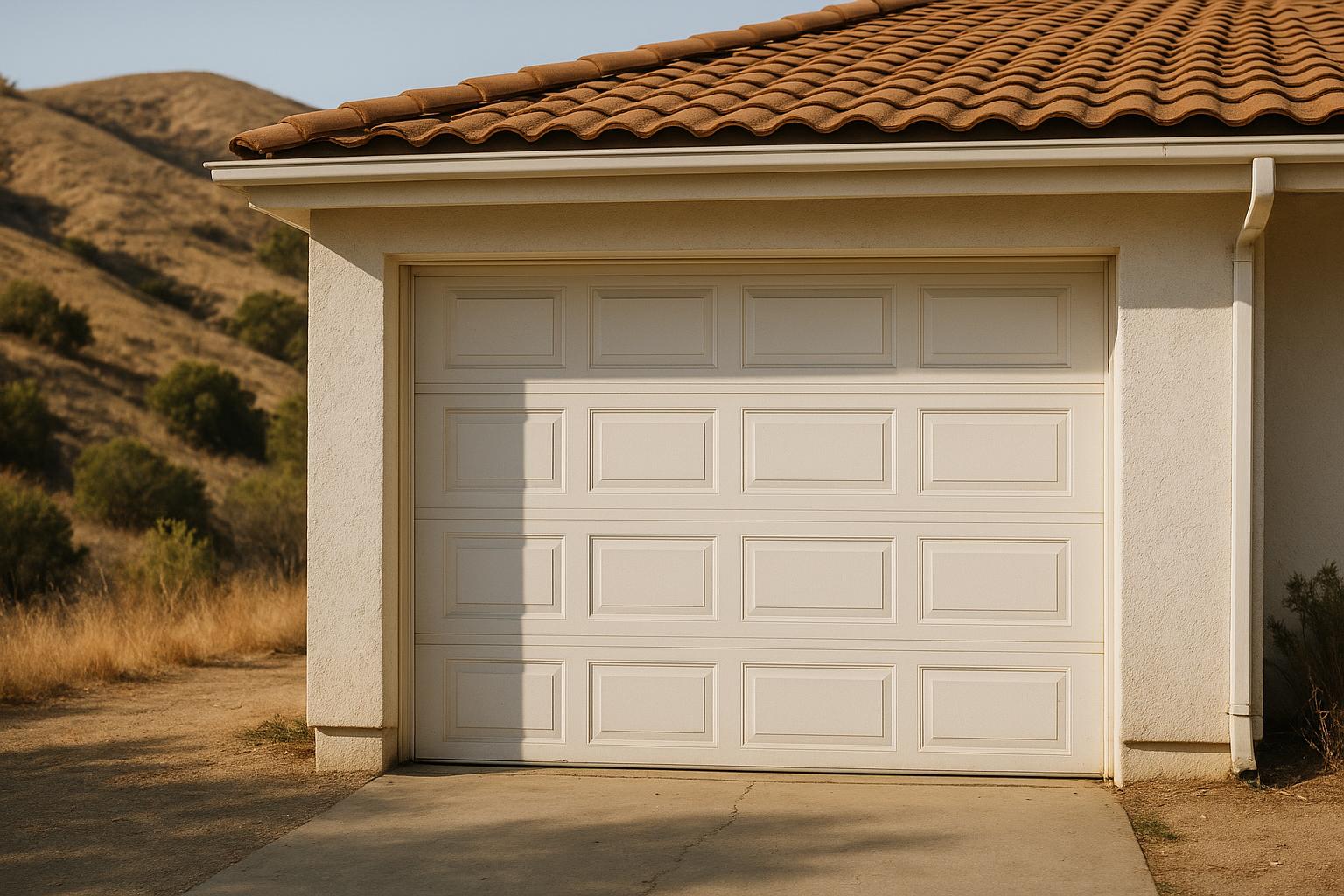
Why Ramona Homeowners Are Asking About Garage Door Insulation
If you've ever stepped into your garage on a scorching August afternoon or a chilly January morning in Ramona, you already know the problem. Your garage can feel like an oven in summer and a refrigerator in winter. And if your garage shares a wall with your living space, that temperature swing doesn't stay contained — it creeps into your home and drives up your energy bills.
Garage door insulation is one of those upgrades that often gets overlooked, but it can make a meaningful difference in comfort, energy efficiency, and even the lifespan of your door. Whether you're thinking about upgrading your existing door or installing a brand new one, here's everything you need to know.
What Does an Insulated Garage Door Actually Do?
An insulated garage door has a layer of insulating material — typically polystyrene or polyurethane — sandwiched between the door's panels. This barrier slows down heat transfer, keeping hot air out in the summer and cold air out in the winter.
But temperature control is only part of the story. Insulated garage doors also offer:
- Noise reduction: The insulation dampens vibration and road noise, making the door significantly quieter when it opens and closes.
- Improved durability: Insulated doors are typically constructed with two layers of steel (or steel and aluminum), making them more rigid and resistant to dents compared to single-layer doors.
- Better door balance: The added weight and structural integrity of an insulated door often results in smoother operation and less strain on your opener and springs.
Does Insulation Really Matter in Ramona's Climate?
Absolutely. Ramona sits in an inland valley where summer temperatures regularly push past 100°F, and winter nights can dip into the 30s. That kind of temperature range puts serious stress on an uninsulated garage.
Here's why that matters beyond simple comfort:
Protecting What You Store
Many homeowners in Ramona use their garage for more than just parking. If you store paint, adhesives, cleaning products, or even wine, extreme heat can degrade or ruin those items. An insulated door helps keep interior temperatures more stable, protecting your belongings.
Saving on Energy Costs
If your garage is attached to your home — and most in Ramona are — an uninsulated garage door is essentially a giant hole in your home's thermal envelope. Cool air from your air conditioner leaks out through the shared wall, and superheated garage air pushes in. An insulated door won't turn your garage into a climate-controlled room, but it can reduce the temperature differential enough to lower your energy bills noticeably.
Using Your Garage as a Workspace
Whether you're working on a project, exercising, or using your garage as a workshop, insulation makes the space usable for more months of the year. In a community like Ramona where many residents enjoy hands-on hobbies and rural living, that extra usability is a real benefit.
Insulated vs. Non-Insulated: What's the Cost Difference?
An insulated garage door typically costs more upfront than a non-insulated model — usually somewhere between 15% and 30% more, depending on the size, style, and insulation type. However, many homeowners find that the energy savings, reduced wear on mechanical components, and improved durability make up for the initial investment over time.
If a full door replacement isn't in the budget right now, insulation kits are available that can be added to your existing door. These kits use rigid foam panels or reflective barriers that fit into the door's panel sections. While they won't match the performance of a factory-insulated door, they're a cost-effective step in the right direction.
Understanding R-Value: How Much Insulation Do You Need?
Insulation is measured by its R-value — the higher the number, the better the thermal resistance. Here's a quick breakdown:
- R-0 to R-6: Minimal insulation. Suitable for detached garages where temperature control isn't a priority.
- R-8 to R-12: Moderate insulation. A good choice for most attached garages in Ramona's climate.
- R-13 to R-18+: High insulation. Ideal if you use your garage as a living space, home gym, or workshop, or if it sits in direct sun for most of the day.
For most homes in the Ramona area, an R-value between 8 and 13 hits the sweet spot between performance and cost. If your garage faces west and takes the full brunt of the afternoon sun, leaning toward the higher end is a smart move.
Polystyrene vs. Polyurethane: Which Is Better?
The two most common insulation materials used in garage doors are polystyrene and polyurethane, and they perform quite differently:
- Polystyrene comes in rigid panels that are placed between the door's layers. It's lighter, more affordable, and offers decent insulation. However, it doesn't bond to the door panels, so it contributes less to overall structural strength.
- Polyurethane is sprayed as a foam that expands and bonds directly to the inside of the door panels. It offers a higher R-value per inch, adds significant rigidity to the door, and provides better noise dampening. It's the premium option and the one most professionals recommend for long-term performance.
Signs Your Current Door Could Benefit from an Upgrade
Not sure if your garage door needs insulation or a full replacement? Here are some signs it might be time:
- Your garage is noticeably hotter or colder than the rest of your home. This is the most obvious indicator that heat is transferring freely through your door.
- Your energy bills spike in summer and winter. An uninsulated attached garage forces your HVAC system to work harder.
- Your door is a single-layer steel panel. These doors offer zero insulation and are prone to denting. Upgrading to a double- or triple-layer insulated door is a significant improvement.
- You can see daylight around the edges or bottom of the door. Insulation won't help much if your weatherstripping is worn out. This is something we check during every service call.
- Your door is more than 15-20 years old. Older doors were rarely built with energy efficiency in mind. Modern insulated doors are lighter, stronger, and far more efficient.
Can You Add Insulation to an Existing Garage Door?
Yes, but with some caveats. Retrofit insulation kits work best on doors that are in good structural condition. If your door is already sagging, dented, or showing signs of wear, adding insulation weight can actually make things worse and put extra strain on your springs and opener.
Before adding insulation to an existing door, it's worth having a professional inspect the door's condition, spring tension, and opener capacity. We do this regularly for homeowners throughout Ramona, Poway, Escondido, and the surrounding communities to make sure any upgrade is done safely.
Making the Right Choice for Your Home
Whether you're building a new home in San Diego Country Estates, replacing an aging door in Lakeside, or just trying to make your Ramona garage more comfortable, insulation is one of the smartest upgrades you can make. It pays for itself in energy savings, extends the life of your door and its components, and makes your garage a more functional part of your home.
If you're not sure where to start, give us a call at Ramona Door & Opener. We'll assess your current setup, talk through your options, and help you find the right solution for your home and your budget — no pressure, just honest advice from a local team that's been doing this for years.