
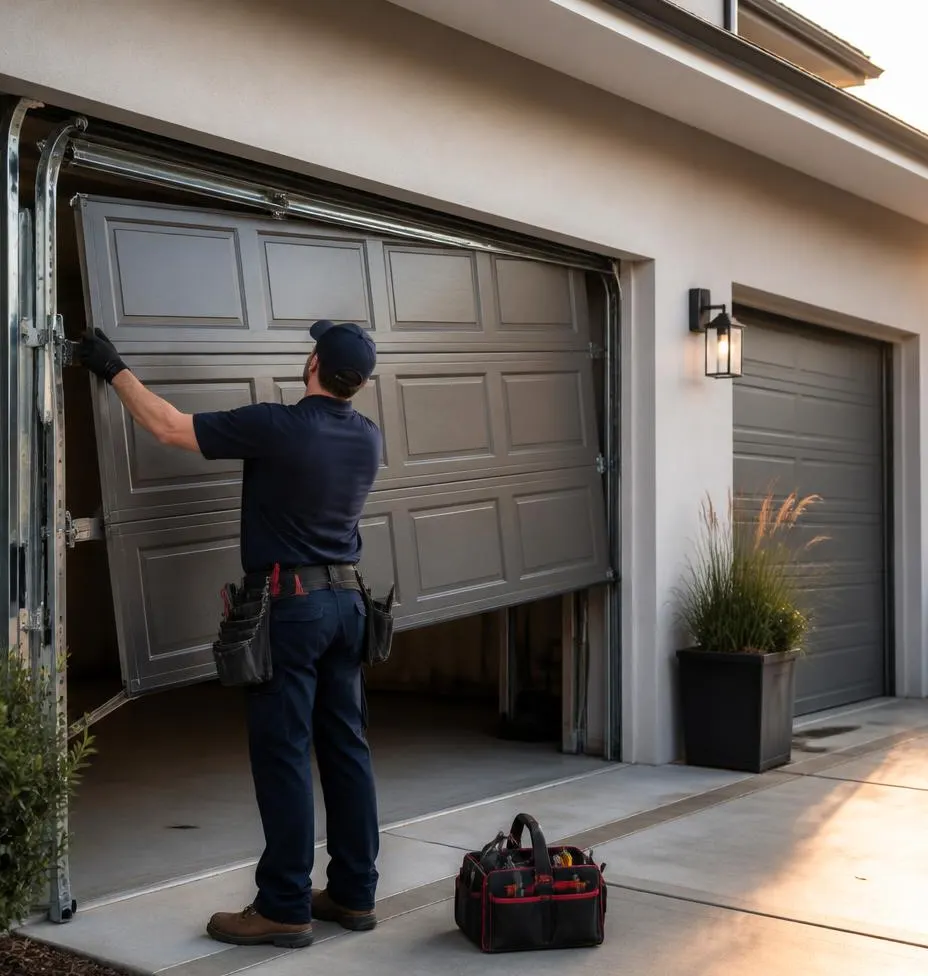
Here's the mistake almost everyone makes first: they hear a new noise, spray some WD-40 on anything metal that moves, and call it handled. It's tempting because it's cheap, it takes two minutes, and the door usually does quiet down for a week or two. But lubricant can't fix a roller that's cracked or a cable that's shedding strands — it just muffles the sound of a problem that's still getting worse underneath.
What Rollers and Cables Actually Do
Your garage door doesn't just swing on a hinge — it's a system under constant tension. The springs store the lifting force, the cables transfer that force from the springs to the bottom corners of the door, and the rollers guide the whole panel up and down the track. Take away any one of those parts and the system doesn't fail gracefully. It fails suddenly.
Rollers are usually nylon with a steel stem and bearing inside, or in older installations, solid steel. They roll hundreds of times a day, and the bearing wears out long before the outside looks damaged. Cables are braided steel wire, often thinner than a pencil, holding back the full weight of the door at the ends closest to the springs — the point of highest stress.
Why the Wear Is Quiet Until It Isn't
A roller doesn't go from fine to broken overnight. It flattens on one side, starts wobbling in the track, and makes a rhythmic thumping or squeaking as it turns. A cable doesn't snap out of nowhere either — it frays one strand at a time near the drum or the bottom bracket, usually invisible unless you're looking right at it with the door open and the garage light on.
The trouble is both of these failures are silent for most of their lifespan. You might hear a little extra noise, notice the door sits slightly crooked, or see it jerk instead of glide — and none of that feels urgent enough to stop and investigate. Then one day a roller finally seizes or a cable finally lets go, and the door either jams hard, drops unevenly, or comes down fast on one side. That's the loud failure. The quiet part was weeks or months of wear that got ignored.
How Ramona's Climate Speeds This Up
This area's dry stretches bring a lot of fine dust and, during fire season, smoke residue that settles into the tracks and rollers. That grit acts like sandpaper on bearings every time the door cycles, wearing them out faster than in a cleaner environment. Then winter rain introduces moisture that can creep into cable strands near the bottom brackets, especially on doors that sit low to a driveway apron, encouraging rust and fraying at exactly the spots under the most tension. If you're closer to the coast, salt air adds another layer of corrosion risk on top of that. Hot inland summers add their own wrinkle — nylon rollers can get brittle with heat cycling and crack at the stem, which you'd never spot without a flashlight and a reason to look.
What You Can Safely Check Yourself
- Open the door partway and look at each roller — uneven wear, visible cracks, or wobble as it turns are all signs it's due for replacement.
- Listen for a new rhythmic noise that matches the door's speed, which usually points to a specific roller rather than the whole system.
- With the door fully down, look at the cable near the bottom bracket for any broken strands poking out like a frayed shoelace.
- Never touch, cut, or try to tighten a cable near the spring or drum — that's the highest-tension part of the whole system.
When to Call Ramona Door & Opener
If you're seeing frayed strands anywhere on a cable, or a roller that's cracked, bent, or has come off the track, that's not a weekend DIY project — cables under tension can cause real injury, and a roller replacement usually means briefly releasing spring pressure safely. Our Cable & Track Repair service handles exactly this: replacing worn rollers, re-tensioning or replacing cables, and realigning the track so the door runs smooth instead of grinding. If it's been a while since anyone's actually inspected these parts, our Preventive Maintenance visit is a good way to catch roller and cable wear before it turns into a jammed or lopsided door.
If your garage door in Ramona, CA is making noise, sitting crooked, or just doesn't feel right when it moves, call Ramona Door & Opener and we'll take a real look before anything fails all at once.